04
Plaid Effects 2026

The Problem
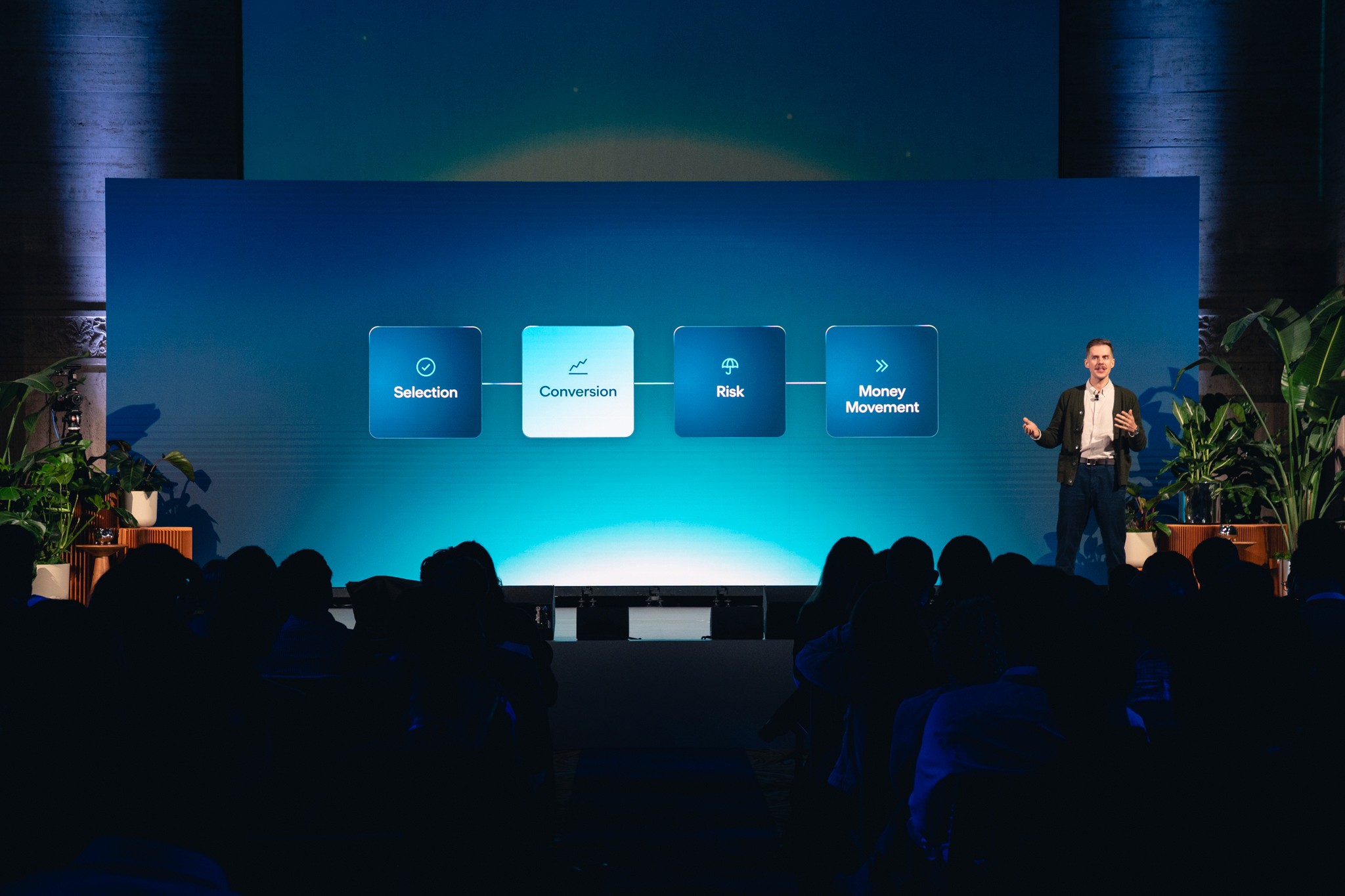
Every year, Plaid hosts a keynote event called Effects. Its part announcement, part celebration...a way to highlight a suite of new products and features powering the next generation of fintech. In 2026, for the first time ever, Effects would take place in person using a hybrid virtual-physical model. The event would reach audiences across the country while streaming live for a select group in Wall Street at the Cipriani building.

The brand would need to speak to two types of customers—those in person, and those watching at home, while showcasing a wide variety of cutting-edge intelligent technology. In both places, we needed to make a statement: a system straddling the world of the physical and digital that also reinforced Plaid's commitment to trust and safety in the age of AI.
Blending AI mockups with historical references lets us explore worlds we never thought possible, and then pitch that vision to production agencies who specialize in that type of design. For Effects, AI let us go wide and pitch something bold: illuminating the Cipriani building in Wall Street entirely with our dark mode aesthetic.

When it comes to spatial design, trust is crucial. We start with our materials, pulling from the familiar language of currency to pay tribute to the history of money. We often use wood inspired by by woodcut illustrations and paper currency, marble and stone inspired by legacy banks and financial institutions, chrome inspired by steel printing presses, metallic security strips, and metal coins. For Effects, we decided to lean into the design language of financial safety: security strips, blacklights, and the beauty of looking behind the veil.
Like a black light on a dollar bill, the event design revealed features just below the surface, highlighting our commitment to fighting financial fraud in the age of AI.


The Solution
By pairing the old language of currency with the vibrant, digital texture of our brand, AI gave us a quick visual blueprint, which offered us more time to build with confidence. This allowed us to take our brand to new heights, developing activations that leverage actual black lights to find "fraudsters," collaborative guilloche artwork, and immersive keynote speeches that brought the message home.
In my opinion, this is where AI thrives, where our dreaming runs wild, pushing unique builds on a screen that later emerge as a physical plan almost instantly. For us at Plaid, it's right there in this tiny gap between dreaming and building that trust starts to take shape.

Today, our physical brand inspires our digital brand, not the other way around. That's intentional. We hope that when you see our brand elsewhere, the colors, the materials, the shape of that system reflects our true values: that we want to connect to you, to have a conversation. That we can trust each other—no, NEED to trust each other—if we're going to make the future matter.
We are being told time and time again to retreat into our digital devices, that AI will replace people, that doing things by hand will die, that we are addicted to everything that's made of pixels. In a world driven by software, the industry wants us to stay online, to never leave the boundaries of our screens.


But then I see companies like ours investing even more in physical space, and watching how our customers run to the opportunity to connect—not to Plaid, but to each other—and I have to wonder what's really happening.